
Blockchain-Based Insurance Policies
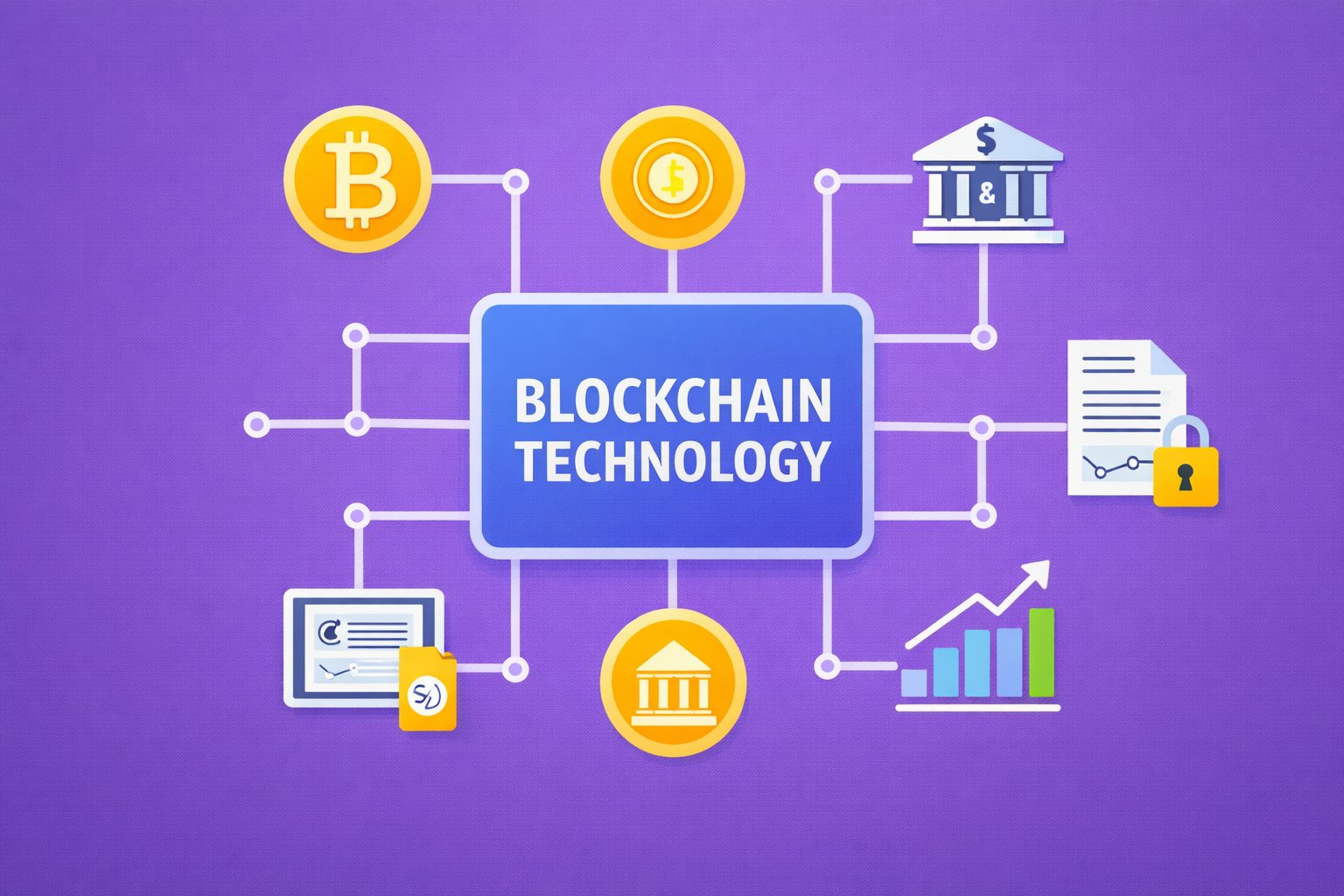
The insurance industry has always relied on paperwork, contracts, verification processes, and claims management systems that often take days or even weeks to complete. While the industry plays a critical role in financial protection and risk management, it has traditionally been slow to adopt new technologies. However, with the rise of blockchain technology, a new model is emerging that could transform how insurance policies are created, managed, and executed. This model is known as blockchain-based insurance.
Blockchain-based insurance policies use blockchain technology and smart contracts to automate and manage insurance agreements. Instead of relying on manual paperwork and intermediaries, insurance policies can be stored as digital contracts on a blockchain. These contracts automatically execute when certain conditions are met. This reduces paperwork, speeds up claims processing, and increases transparency between the insurer and the customer.
To understand blockchain-based insurance, it is important to first understand what a smart contract is. A smart contract is a self-executing digital agreement stored on a blockchain. It automatically runs when predefined conditions are met. For example, in traditional insurance, if a flight is delayed, the customer must file a claim, submit documents, and wait for approval. In a blockchain-based insurance system, the smart contract can automatically check flight data from an official database. If the delay exceeds a certain number of hours, the claim is automatically approved and the compensation is transferred instantly to the customer’s account. No paperwork, no manual verification, and no waiting time.
One of the biggest advantages of blockchain-based insurance is transparency. In traditional insurance systems, customers often do not fully understand policy terms, claim conditions, or claim status. Blockchain creates a shared ledger where both the insurer and the customer can see the policy terms and claim status in real time. Once data is recorded on a blockchain, it cannot be changed easily, which reduces disputes and increases trust between both parties.
Another major benefit is faster claims processing. Claims processing is one of the most expensive and time-consuming parts of the insurance industry. It involves verification, document checks, risk assessment, and approval processes. Blockchain and smart contracts can automate many of these steps. For example, crop insurance can be connected to weather data. If rainfall drops below a certain level, the smart contract automatically triggers the insurance payout to the farmer. This system is already being tested in some countries to support farmers affected by droughts and natural disasters.
Fraud reduction is another important advantage of blockchain-based insurance. Insurance fraud is a major problem worldwide and costs insurance companies billions of dollars every year. Fraud can happen when customers submit fake claims or when the same claim is submitted to multiple insurance companies. Because blockchain records are permanent and shared, it becomes much harder to submit fake or duplicate claims. All claim records are stored on a shared system that can be verified by multiple parties.
Blockchain-based insurance also reduces administrative costs. Traditional insurance involves many intermediaries such as agents, brokers, claim processors, auditors, and third-party verification agencies. Smart contracts can automate many of these functions, which reduces operational costs for insurance companies. Lower operational costs can lead to lower premiums for customers.
Another important concept related to blockchain insurance is parametric insurance. Parametric insurance is a type of insurance where payouts are triggered automatically when a specific event occurs, rather than after a loss is assessed. For example, if an earthquake of a certain magnitude occurs in a specific location, the insurance payout is triggered automatically. Blockchain and smart contracts are ideal for parametric insurance because they can automatically verify data from trusted sources and trigger payments instantly.
Despite these advantages, blockchain-based insurance also faces several challenges. One major challenge is regulation. Insurance is a highly regulated industry, and governments need to create rules for how blockchain-based insurance contracts will be recognized legally. Smart contracts must be legally enforceable for this system to work on a large scale.
Another challenge is data accuracy. Smart contracts rely on external data sources, often called oracles, to trigger contract execution. If the data provided by the oracle is incorrect, the smart contract may execute incorrectly. Therefore, reliable and secure data sources are very important for blockchain insurance systems.
There is also the challenge of technology adoption. Many insurance companies still use legacy systems that are not compatible with blockchain technology. Upgrading infrastructure requires investment, time, and technical expertise. However, many insurtech startups are already building blockchain-based insurance platforms, and traditional insurance companies are beginning to explore partnerships with these technology providers.
In the future, blockchain-based insurance could become very common in areas such as travel insurance, crop insurance, health insurance, property insurance, and disaster insurance. Claims could be processed instantly, policies could be stored digitally, and fraud could be reduced significantly. Customers would not need to fill out long claim forms or wait weeks for claim approval. Everything could happen automatically through smart contracts.
Blockchain-based insurance also has the potential to expand insurance access in developing countries. Many people in developing regions do not have access to traditional insurance because of high administrative costs and lack of infrastructure. Blockchain can reduce operational costs and make micro-insurance possible. For example, farmers could buy low-cost insurance policies through mobile phones, and payouts could be triggered automatically based on weather data.