
Stablecoins vs Cryptocurrency
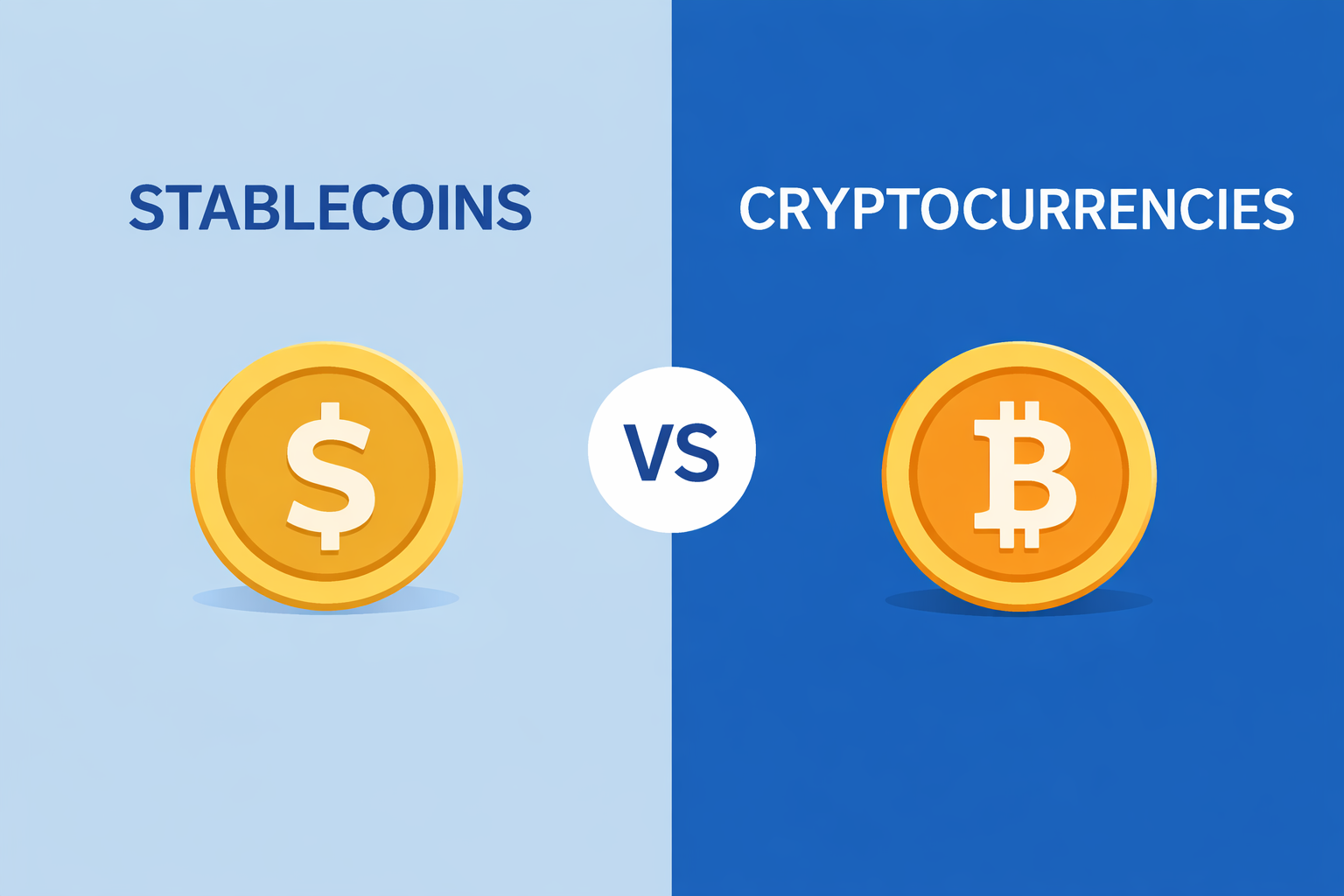
The rise of digital currencies has transformed the global financial system. Over the past decade, cryptocurrencies have become popular as an alternative form of digital money. However, one major problem with cryptocurrencies is their price volatility. The value of many cryptocurrencies can change very quickly, which makes them risky for daily transactions and business use. To solve this problem, a new type of digital currency called stablecoins was introduced. Today, both cryptocurrencies and stablecoins are important in the world of digital finance, but they serve different purposes.
Cryptocurrency is a digital currency that uses blockchain technology and cryptography to secure transactions. Cryptocurrencies are decentralized, which means they are not controlled by any central authority such as a government or bank. Popular cryptocurrencies include Bitcoin and Ethereum. The value of cryptocurrencies is determined by demand and supply in the market, which is why their prices go up and down frequently. Many people invest in cryptocurrencies because of their high return potential, but the risk is also high due to price fluctuations.
Stablecoins, on the other hand, are a type of cryptocurrency designed to maintain a stable value. Their value is usually linked to a stable asset such as the US Dollar, gold, or other financial assets. For example, if a stablecoin is linked to the US Dollar, then 1 stablecoin will always be approximately equal to 1 US Dollar. This stability makes stablecoins more suitable for payments, money transfers, and business transactions.
The main difference between stablecoins and traditional cryptocurrencies is price stability. Cryptocurrencies are volatile, while stablecoins are stable. This makes cryptocurrencies more suitable for investment and trading, while stablecoins are more suitable for transactions and payments.
Stablecoins maintain their stable value using different methods. Some stablecoins are backed by real assets such as cash reserves or gold. These are called fiat-backed stablecoins. Some stablecoins are backed by other cryptocurrencies, which are called crypto-backed stablecoins. Some stablecoins use algorithms to control supply and demand to maintain price stability, and these are called algorithmic stablecoins.
Stablecoins are widely used in crypto trading because they provide stability. Traders convert cryptocurrencies into stablecoins when the market is unstable to protect their value. Stablecoins are also used for international money transfers because they are faster and cheaper than traditional banking systems.
However, stablecoins also have risks. If a stablecoin is backed by real assets, users must trust that the company actually has the reserves. If it is algorithmic, the system may fail to maintain the stable value. Governments and financial regulators are also working on regulations for stablecoins because they can affect the financial system.
Cryptocurrencies also have advantages and disadvantages. They provide decentralization, transparency, and high return potential, but they also have risks such as price volatility, regulatory uncertainty, and security risks.
In the future, both stablecoins and cryptocurrencies will play important roles in digital finance. Cryptocurrencies may be used more for investment and decentralized finance applications, while stablecoins may be used more for payments, digital banking, and international money transfers.