
Posts by
Key Industry Insights for Fintechs and Financial Services Organizations

Series details As an industry, fintech has delivered valuable new innovations to consumers and served as an engine of economic growth for several years. That growth brings new opportunities – and challenges – in the form of bank partnerships, regulatory scrutiny, and other critical areas. Even as it continues to innovate, the industry is maturing, and banks now are more likely to see fintech companies as partners rather than competitors. Still, risks remain that must be carefully navigated. Fintech companies need to put appropriate controls and safeguards in place. Striking the right balance between innovation and risk management will be key to thriving in the dynamic fintech landscape of today and beyond. In this webinar series, Crowe specialists will discuss emerging challenges and opportunities for the fintech industry and how to address them. Over the course of the series, they will cover topics including: Each session of this series is recommended for 1.5 hours of CPE credit. 2026 Future of Fintech Webinar Series dates
Read MoreDisruption and the Fintech Revolution — Free Fintech Webinar

TOPIC Register for free on the EEC-ECT Accredited Centre’s global webinar presented by Phill Gillespie. Phill is the Chief Product Officer of the UK’s largest Personal Financial Management Solution, Money Dashboard, which is available across web and mobile. Praised by the BBC for letting you “take control through one central hub so you know what’s going on with your money”, Money Dashboard is a prime example of how the Fintech Revolution is evolving. Phill has been at the forefront of this evolution, and in addition to his current role, his previous work includes project managing award-winning mobile apps, creating a world-first data insights platform, and expanding the effectiveness of a leading Natural Language Processing company. An insight in to the exciting developments in the arena of Financial Technologies is crucial for individuals looking to build long-term careers in the Finance, Technology and related industries. The webinar will guide you through the most significant advances in the sector to date, making sure that you are aware of what is needed to ride the wave: – What is “Fin”, and what is “Tech” – the fusing of two sectors– Disruption – how is Fintech changing the way we operate?– Explaining Fintech – why here, why now and why not something else?– Fintech examples– The future of Fintech This webinar is worth a CPD hour. Certificate of Participation awarded. CONFIRMED SPEAKERS Phill Gillespie is the Chief Product Officer of the UK’s largest Personal Financial Management Solution, Money Dashboard, which lets you see all of your banking accounts in one place, in either web or mobile apps. Praised by the BBC for letting you “take control through one central hub so you know what’s going on with your money”, Money Dashboard is a prime example of how the Fintech Revolution is evolving. Phill has been at the forefront of this evolution, and in addition to his current role, his previous work includes project managing award-winning mobile apps, creating a world-first data insights platform, and expanding the effectiveness of a leading Natural Language Processing company. Register for the free training webinar using the form above. ECT WEBINAR SERIES (upcoming free training): Digital Marketing’s Evolution and Disruption: An Online Lesson Managing Energy Resources. How to make electrical installations more efficient. Corporate Social Responsibility (CSR). Engineering Design principles.
Read MoreFinTech Week

Welcome to the 2nd Fintech Week 2026, taking place from February 16–17, 2026, in Dubai, UAE — one of the world’s most dynamic financial hubs. This premier global event is set to redefine the future of financial services under the central theme: “Payments, Security and Beyond.” Building on this momentum, we are excited to announce the 3rd Fintech Week & Expo 2026, happening on February 26–27, 2026, at the Holiday Inn Amsterdam – Arena Towers, in Amsterdam, The Netherlands — one of Europe’s leading hubs for financial innovation, regulatory foresight, and digital transformation. This landmark gathering will unfold under a powerful new theme: “Trust, Transformation & Tech: The Future of Financial Innovation.” Target Audience- Banking, fintech, insurance, retail, and tech professionals, along with regulators, startups, VCs, and industry leaders shaping the future of payments and security 50+ Main Sponsors & ExhibitorsBanks, fintech companies, payment providers, cybersecurity firms, AI and tech innovators, regulatory bodies, retailers, financial service providers, enterprise solution providers, startups, investors and more.
Read MoreWebinar | 26 February 2026 | The future of payments: Trends shaping a cashless world and what sets PayTech Awards nominees apart

Date: 26th February 2026 | 15:00 GMT As we step into 2026, the payments sector is poised to further innovate and transform consumers’ daily lives. From contactless payments and digital wallets to government-backed digital ID systems, fintech companies and neobanks are at the forefront, driving these advancements and shaping the future of settlements. Join us for an exclusive panel discussion featuring our esteemed PayTech Award judges, who will share expert insights into the payment trends shaping the future of the industry and reveal what they value most in our nominees. In this webinar, we will discuss: Who should watch this webinar:
Read MoreThe Future of Fintech – Key Industry Insights for Fintechs and Financial Services Organisations
Series details As an industry, fintech has delivered valuable new innovations to consumers and served as an engine of economic growth for several years. That growth brings new opportunities – and challenges – in the form of bank partnerships, regulatory scrutiny, and other critical areas. Even as it continues to innovate, the industry is maturing, and banks now are more likely to see fintech companies as partners rather than competitors. Still, risks remain that must be carefully navigated. Fintech companies need to put appropriate controls and safeguards in place. Striking the right balance between innovation and risk management will be key to thriving in the dynamic fintech landscape of today and beyond. In this webinar series, Crowe specialists will discuss emerging challenges and opportunities for the fintech industry and how to address them. Over the course of the series, they will cover topics including: Each session of this series is recommended for 1.5 hours of CPE credit. 2026 Future of Fintech Webinar Series dates
Read MoreFintech Stocks Regain Investor Attention as Market Sentiment Improves

Fintech stocks are once again drawing investor interest as global market sentiment shows signs of stabilization and confidence returns to technology-led financial services companies. After a prolonged period of valuation pressure and cautious capital deployment, investors are selectively re-engaging with fintech firms that demonstrate clear paths to profitability and sustainable growth. Publicly listed fintech companies with strong fundamentals, diversified revenue streams, and disciplined cost structures are seeing renewed attention from institutional and retail investors. Payments, digital banking, wealth technology, and alternative lending platforms are among the segments benefiting most from this shift, particularly those with exposure to emerging markets and cross-border commerce. Market participants are increasingly differentiating between high-quality fintech operators and those that relied heavily on aggressive growth strategies in the past. Companies that have improved margins, reduced customer acquisition costs, and strengthened balance sheets are being rewarded with improved valuations and higher trading volumes. Macroeconomic factors are also contributing to the renewed interest. Expectations of stable interest rates and easing inflation pressures have improved outlooks for consumer spending and lending activity. In parallel, advancements in artificial intelligence and automation are helping fintech firms streamline operations, enhance fraud detection, and personalize financial products, further strengthening investor confidence. Analysts note that fintech stocks are no longer viewed purely as high-risk growth plays but are increasingly being assessed alongside traditional financial services firms. This shift reflects the sector’s maturation and its growing role in the global financial system. While volatility remains, the renewed focus on quality and execution suggests that fintech equities may be entering a more stable phase. Investors are expected to remain selective, favoring companies that balance innovation with regulatory compliance and long-term financial discipline.
Read MoreRising Cybersecurity Risks Create New Challenges for Insurers and Fintech Platforms

The rapid digitization of financial services is exposing insurers and fintech platforms to a new wave of cybersecurity threats, forcing companies to rethink how they protect sensitive customer data and digital assets. As more financial products move online, cyber risk is emerging as one of the most critical challenges facing the fintech–insurance ecosystem. Fintech platforms increasingly rely on open APIs, cloud infrastructure, and third-party service providers to deliver seamless digital experiences. While these technologies accelerate innovation, they also expand the attack surface for cybercriminals. Data breaches, ransomware attacks, and identity fraud incidents are becoming more sophisticated, targeting both customer-facing applications and backend financial systems. Insurers, in particular, are facing mounting pressure as they underwrite cyber risk for fintech clients while also managing their own digital exposure. Many insurers are struggling to accurately price cyber insurance policies due to limited historical data and the rapidly evolving nature of cyber threats. This uncertainty has led to higher premiums, tighter coverage terms, and increased scrutiny of fintech security practices. Regulators across major markets are responding by introducing stricter cybersecurity and data protection requirements. Fintech firms are now expected to demonstrate stronger governance, continuous monitoring, and incident response capabilities. Failure to meet these expectations can result in regulatory penalties, reputational damage, and loss of customer trust. To address these challenges, fintech and insurance companies are investing heavily in advanced security technologies such as AI-driven threat detection, behavioral analytics, zero-trust architectures, and real-time fraud monitoring. Collaboration between fintechs, insurers, and cybersecurity providers is also increasing, with shared intelligence and risk frameworks becoming more common. Industry experts warn that cybersecurity will no longer be treated as a back-office function but as a core business priority. Companies that embed security into product design and customer journeys are expected to gain a competitive advantage, while those that lag may face rising costs and operational disruptions. As digital finance continues to scale globally, managing cyber risk effectively will be critical to sustaining trust, enabling innovation, and protecting the long-term stability of the fintech ecosystem.
Read MoreBrazil’s Agibank Targets U.S. IPO as Investor Appetite for Fintech Rebounds
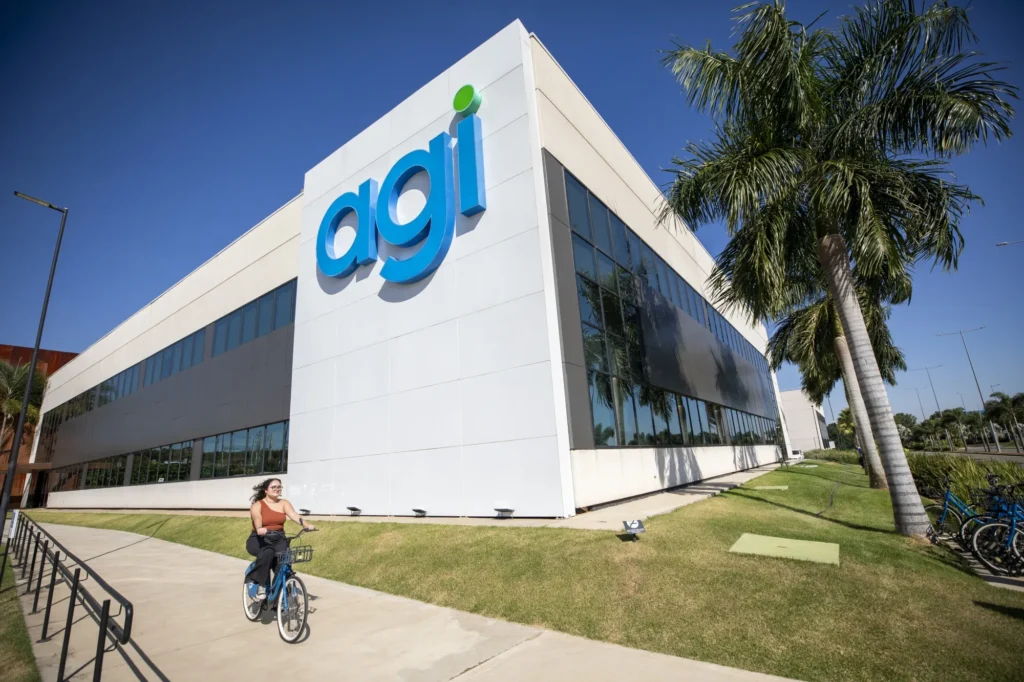
Brazilian digital lender Agibank is preparing for a potential initial public offering in the United States, aiming for a valuation of up to $3.3 billion. The move reflects renewed investor confidence in profitable, regionally focused fintech companies after a prolonged slowdown in global tech listings. Founded to serve underserved and lower-income populations, Agibank has built its business around simplified digital banking combined with physical service points in smaller cities and semi-urban areas. This hybrid model has helped the company scale rapidly while maintaining strong customer engagement in segments often overlooked by traditional banks. The planned U.S. listing would allow Agibank to raise fresh capital to support expansion, strengthen its balance sheet, and invest further in technology, credit risk analytics, and product diversification. The company has increasingly focused on secured lending, payroll-linked credit, and pension-backed loans, which have contributed to improved asset quality and more predictable revenue streams. Agibank’s leadership has highlighted profitability and disciplined growth as key differentiators compared to earlier fintech IPO waves. Unlike many digital banks that prioritized growth over margins, Agibank has emphasized sustainable unit economics and tighter credit controls, making it more attractive to public market investors. The IPO effort comes amid a broader revival of fintech listings, particularly from emerging markets where digital adoption continues to outpace traditional banking infrastructure. Latin America, in particular, has drawn attention for its large underbanked population, favorable demographics, and increasing regulatory openness to digital finance. Market analysts caution that public market conditions remain selective, with investors closely scrutinizing governance, profitability, and risk management. However, Agibank’s regional focus, growing customer base, and improving financial performance position it well compared to earlier fintech entrants. If successful, Agibank’s U.S. listing could pave the way for other Latin American fintechs to access global capital markets, reinforcing the region’s growing influence in the global financial technology ecosystem.
Read MoreRevolut Launches Full Banking Operations in Mexico, Marking First Major Expansion Outside Europe

Revolut has officially launched full banking operations in Mexico, marking its first major expansion beyond Europe and signaling a bold push into Latin America’s fast-growing digital finance market. The move positions Revolut to compete directly with local banks and regional neobanks in one of the world’s most underbanked large economies. With the launch, Revolut now offers Mexican customers a full suite of banking services, including savings accounts, debit cards, domestic and international payments, and foreign exchange services. The company is also expected to roll out credit products and investment offerings in later phases, subject to regulatory approvals. Mexico represents a strategic entry point for Revolut due to its large population, high smartphone penetration, and persistent gaps in access to traditional banking services. A significant portion of Mexico’s adult population remains either unbanked or underbanked, creating strong demand for digital-first financial platforms that can deliver low-cost, easy-to-use services. Revolut secured the necessary regulatory authorization from Mexican financial authorities, allowing it to operate as a fully licensed digital bank rather than a limited payments provider. This regulatory milestone enables the company to accept deposits and offer regulated financial products, putting it on equal footing with domestic financial institutions. Company leadership has emphasized that Mexico will serve as a foundation for broader expansion across Latin America. By establishing operations in one of the region’s largest economies, Revolut aims to build regional expertise, local partnerships, and scalable infrastructure that can support future market entries. The expansion also intensifies competition in the Latin American fintech landscape, where digital banks such as Nubank, Klar, and Mercado Pago have already gained strong user bases. Analysts expect increased competition to drive innovation, improved customer experiences, and more affordable financial products for consumers. Revolut’s entry into Mexico underscores a growing trend of European fintech firms looking beyond their home markets for growth as competition intensifies and regulatory pressures rise in Europe. For Mexico, the arrival of another global digital bank is likely to accelerate financial inclusion and modernize the country’s retail banking ecosystem.
Read MoreSingapore Backs Revolut’s Asia Push with Strategic Investment in Local Operations

Singapore has taken another decisive step to strengthen its position as a global fintech hub, with the Singapore Economic Development Board (EDB) making a strategic investment in Revolut’s Singapore operations. The move signals strong government support for scaling digital financial services across Southeast Asia and reinforces Singapore’s ambition to be the region’s leading base for fintech innovation. Revolut, one of the world’s largest digital finance platforms, has been steadily expanding its footprint in Asia, with Singapore serving as a key regional headquarters. The investment from EDB is aimed at accelerating Revolut’s product development, talent acquisition, and infrastructure build-out in the city-state, while also supporting innovation in payments, wealth management, and cross-border financial services. Singapore’s EDB has increasingly focused on attracting high-growth fintech firms that can contribute to the local economy through skilled employment, technology transfer, and ecosystem development. By backing Revolut, the agency is betting on the company’s ability to serve not just Singaporean customers, but also the broader Asia-Pacific market, where demand for digital banking and seamless international payments continues to rise. Revolut’s Singapore unit already offers a range of services including multi-currency accounts, international remittances, cards, and investment products. With fresh strategic backing, the company is expected to expand its offerings further, potentially introducing more advanced wealth products, business banking tools, and AI-driven financial management features tailored to Asian consumers and enterprises. Company executives have described Singapore as a natural launchpad for Asia expansion due to its strong regulatory framework, deep financial talent pool, and reputation for innovation. The EDB investment is also expected to strengthen collaboration between Revolut and local fintech startups, banks, and technology providers, helping integrate global fintech capabilities with regional market needs. Industry analysts view the investment as part of a broader trend where governments are actively partnering with fintech firms to remain competitive in the global financial landscape. As traditional financial centers face increasing competition from digital-first platforms, public-private collaboration is becoming a key driver of growth and innovation. For Revolut, the backing from Singapore’s economic development agency adds credibility and momentum to its Asian strategy. For Singapore, it reinforces the country’s role as a gateway for global fintech firms looking to scale across Southeast Asia, India, and beyond.
Read More